
Please read my disclosure policy to understand how I work with companies and individuals. Linking to a specific site does not imply endorsement of all of their services or content.
Key Takeaways
- Building or renovating a sports court requires more than selecting a playing surface. Construction, drainage, equipment, lighting, and ongoing maintenance all matter.
- Toronto Court Equipment reports 40 years of experience and has built more than 200 courts, offering Ontario property owners a starting point for court construction and restoration.
- Pickleball Canada’s 2026 survey estimates 1.80 million players nationwide, including approximately 702,000 in Ontario.
- Specialized companies can help facility owners compare surfacing, training equipment, windscreens, lighting, and basketball accessories.
- Planning for future maintenance and changing recreational needs can help protect a facility’s long-term value.
Whether you’re renovating a neighborhood tennis court, creating a backyard pickleball space, or planning a multi-sport facility for a school or community center, choosing the right companies can make a significant difference in the finished project.
A successful court needs more than attractive colors and clearly painted lines. Drainage, surface preparation, fencing, lighting, equipment, accessibility, and maintenance all influence how well a facility performs over time. Ontario’s changing seasons make these considerations particularly important.
The following seven companies represent different areas of sports court construction, equipment, and facility improvement. They are not presented as a formal partnership or ranking, but as resources worth exploring when planning a court project.
1. Toronto Court Equipment: Court Construction and Restoration
For homeowners, schools, clubs, and municipalities searching for a sports court builder ontario canada, Toronto Court Equipment offers services covering construction, resurfacing, restoration, maintenance, and equipment.
The company reports 40 years of industry experience and has built more than 200 courts. Its services include tennis and pickleball courts, basketball courts, running tracks, roller hockey surfaces, bocce facilities, and multi-purpose recreational areas.
One advantage of working with a court construction specialist is the chance to assess the entire facility before you invest in improvements. An aging court may need more than fresh acrylic coating. Cracks, drainage problems, an unstable base, or deteriorating fencing can affect a resurfacing project’s results.
Why Consider This Company?
- Construction experience: The company reports four decades of court-related experience.
- Multiple services: The company offers new construction, resurfacing, restoration, maintenance, and equipment planning.
- Variety of court types: Services extend beyond tennis to pickleball, basketball, and other recreational surfaces.
- Industry involvement: The company identifies itself as a member of the American Sports Builders Association and Racquet Sports Professionals Association.
Practical example: A municipality with deteriorating tennis courts could begin with a professional assessment to determine whether resurfacing, more extensive repairs, or conversion to a different court layout would best serve the community.
2. California Sports Surfaces: Choosing the Right Playing Surface
The surface beneath a player’s feet affects traction, ball response, comfort, and maintenance requirements. California Sports Surfaces specializes in sports surfacing systems, including acrylic options for tennis, pickleball, basketball, and multi-purpose recreational facilities.
Different court applications may require different surface characteristics. A facility designed primarily for competitive tennis may have different priorities than a neighborhood recreation area used for several sports.
Why Consider This Company?
- Offers surfacing options for different sports and facility needs.
- Provides systems that can be evaluated based on performance, budget, and maintenance requirements.
- Gives facility owners choices when comparing traditional hard-court and cushioned surface systems.
Practical example: A community recreation center could compare acrylic surface options for a court that accommodates both tennis and pickleball, taking into account the intended users, available budget, and maintenance expectations.
Before selecting a surface, ask the contractor to evaluate the existing base, drainage, cracks, and any previous coatings. Even a high-quality surface system depends on proper preparation and installation.
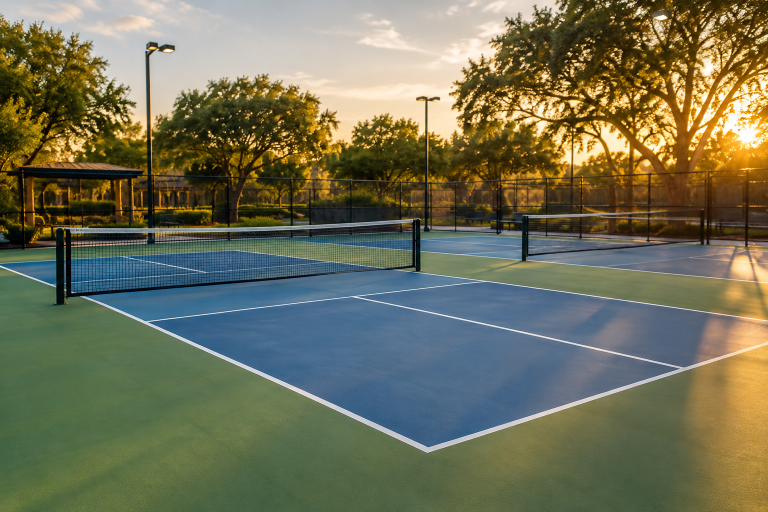
3. Har-Tru: Exploring Alternative Tennis Court Surfaces
Not every tennis facility needs the same type of playing surface. Har-Tru is known for its clay court systems and also offers other surface products, equipment, and maintenance solutions.
Clay courts provide a different playing experience from conventional acrylic hard courts. However, the decision to install or maintain a clay surface should involve more than personal preference.
Why Consider This Company?
- Offers alternatives to conventional hard-court playing surfaces.
- Provides products and equipment associated with court care and maintenance.
- Allows tennis clubs to explore playing characteristics that may appeal to different members.
Practical example: A private tennis club considering a surface renovation could compare the construction requirements, maintenance commitments, drainage needs, and long-term costs of clay, hybrid, and acrylic court options.
Ontario’s climate is an important consideration. Seasonal conditions, freeze-thaw cycles, and available maintenance staff should all influence the final surface decision.
4. LSI Industries: Sports Court Lighting
Lighting is sometimes treated as an accessory, but it can affect how often a facility is used. Properly designed court lighting may extend playing opportunities into the evening, especially during seasons when daylight hours are shorter.
LSI Industries provides lighting products and solutions for commercial and recreational applications, including sports facilities.
Why Consider This Company?
- LED lighting options can support recreational and athletic facilities.
- Lighting design can address visibility, glare, and light distribution.
- Facility planning can incorporate controls and fixture selection.
Practical example: A pickleball club offering evening lessons and leagues could evaluate lighting that provides appropriate visibility while limiting unnecessary light spill into surrounding residential areas.
Before installing lights, facility owners should also review applicable local requirements, electrical infrastructure, pole placement, and maintenance access.
5. Playmate Tennis: Training and Practice Equipment
A well-designed court becomes even more useful when players have access to appropriate training equipment. Playmate Tennis manufactures tennis ball machines used for individual practice, coaching, and organized training sessions.
Ball machines let players repeat specific shots, build consistency, and work on technique without needing someone to feed every ball.
Why Consider This Company?
- Training machines can support private lessons, junior programs, and independent practice.
- Adjustable settings on applicable models allow for different drill types.
- Equipment can add programming opportunities to existing tennis facilities.
Practical example: A tennis club could introduce scheduled ball-machine practice sessions during quieter hours, giving members additional ways to use the courts.
Facility managers should consider storage, charging requirements, equipment supervision, and maintenance before purchasing a machine.
6. Aer-Flo Sports: Windscreens and Court Accessories
Windscreens can serve several purposes at outdoor sports facilities. Depending on the material and installation, they can reduce visual distractions, provide privacy, and create opportunities for facility branding.
Aer-Flo Sports offers sports windscreens and related products for athletic and recreational environments.
Why Consider This Company?
- Windscreen products offer options for different court settings.
- Colors and customization can help facilities maintain a consistent appearance.
- Appropriate screening can improve the visual environment around outdoor courts.
Practical example: A tennis club could add customized windscreens displaying its name or logo to create a more consistent look around the playing area.
However, windscreens also increase the wind load on fencing. Before installation, owners should confirm that fence posts, foundations, and attachment systems suit the selected material and local conditions.
7. Bakko: Basketball Equipment for Multi-Sport Facilities
Multi-sport courts can give schools, neighborhoods, and recreational facilities more flexibility. Basketball equipment is one way to expand the usefulness of a well-designed playing area.
Bakko manufactures basketball backboards and related equipment for recreational and athletic settings.
Why Consider This Company?
- Basketball equipment can support additional recreational activities at suitable facilities.
- Consider different equipment configurations based on player needs and available space.
- Early equipment planning helps ensure appropriate placement and clearances.
Practical example: A community recreation area could incorporate basketball equipment into a larger court improvement project rather than adding it after construction is complete.
Basketball installations should account for safe playing space, mounting requirements, nearby fencing, and potential conflicts with other sports using the same area.
What Ontario Court Projects Can Teach Facility Owners
Ontario communities are increasingly considering how to make existing recreational spaces more versatile.
Toronto’s Clairlea Park tennis and sports court improvement project offers a useful example. The city’s published design includes a dedicated tennis court, two dedicated pickleball courts, a full-size basketball court, improved pathways, seating, fencing, and additional amenities.
The project illustrates an important principle: a sports court is part of a larger recreational environment. Access, circulation, spectator areas, safety, and the needs of different user groups deserve attention alongside the playing surface itself.
Why Pickleball Demand Matters
According to Pickleball Canada’s 2026 participation survey, approximately 1.80 million Canadians play pickleball, including an estimated 702,000 in Ontario.
The survey also reported an estimated 14% increase in national participation compared with 2025. That growing interest gives municipalities, clubs, schools, and private facility owners another reason to evaluate how they use their available court space.
However, converting existing tennis courts is not automatically the right solution everywhere. Facility planners should consider current tennis participation, pickleball demand, noise, court availability, accessibility, and community feedback before deciding whether to create dedicated courts or shared-use spaces.
Questions to Ask Before Starting a Court Project
Before hiring a contractor or ordering equipment, facility owners can save time by clarifying a few important details.
- Who will use the facility? Consider age groups, skill levels, accessibility needs, and expected participation.
- Which sports will be played? Determine whether dedicated courts or a shared-use design makes more sense.
- What is the condition of the existing site? Review drainage, grading, foundations, surface damage, and surrounding infrastructure.
- What maintenance will be required? Compare cleaning, repairs, seasonal care, and eventual resurfacing needs.
- Will lighting or fencing need upgrades? Include these expenses in the project budget rather than treating them as last-minute additions.
- Can the facility adapt in the future? Consider whether changing recreation programs might require different equipment or court configurations.
It is also worth asking prospective contractors for relevant project examples, written estimates, warranty information, and a clear explanation of what is included in the work.
Conclusion
Building or improving a tennis, pickleball, or multi-sport court involves several interconnected decisions. Surface quality, drainage, lighting, equipment, accessibility, and ongoing maintenance all contribute to the facility’s long-term usefulness.
Toronto Court Equipment provides Ontario court construction and maintenance services, while companies such as California Sports Surfaces, Har-Tru, LSI Industries, Playmate Tennis, Aer-Flo Sports, and Bakko offer specialized products and solutions worth considering during the planning process.
By evaluating the entire facility rather than focusing on individual purchases, property owners and recreation managers can make more informed decisions and create courts that serve their communities for years to come.

