
Please read my disclosure policy to understand how I work with companies and individuals. Linking to a specific site does not imply endorsement of all of their services or content.
Table of Contents
- Why Fast Action Matters
- First Steps at the Scene
- Details That Can Identify a Vehicle
- Medical Care and Injury Records
- Witnesses, Cameras, and Physical Evidence
- Reporting and Insurance
- Common Mistakes to Avoid
- Special Concerns for Pedestrians and Cyclists
- Building an Evidence File
- Frequently Asked Questions
A hit-and-run accident can happen in seconds, leaving victims frightened, injured, and uncertain about what to do next. When another driver leaves the scene without stopping, gathering information and protecting your rights can become more complicated. However, knowing what steps to take after a hit-and-run accident in Mobile, Alabama, can make a meaningful difference.
Whether a collision occurs near downtown Mobile, along a busy roadway, or in a neighborhood parking lot, your first priorities should be safety, medical attention, and preserving evidence. Individuals seeking guidance about their legal options may also consult RogerVarnerLaw while gathering documentation and evaluating their next steps.
Although identifying a fleeing driver is not always possible, taking prompt, organized action can help investigators understand what happened and provide valuable support for an insurance claim.
Why Acting Quickly After a Hit-and-Run Matters
Following a hit-and-run accident, time can be one of the most important factors in preserving evidence. Details that seem insignificant immediately after a collision may later help investigators identify the vehicle involved.
Unfortunately, valuable evidence can disappear quickly. Rain may wash away tire marks, passing traffic can disturb debris, nearby security cameras may overwrite recordings, and witnesses can forget important details.
Taking action as soon as it is safe to do so can help preserve information that might otherwise be lost. Even a partial license plate number, vehicle description, or direction of travel may become useful when combined with other evidence.
First Steps to Take at the Accident Scene
Your safety should always come first. Although it may be tempting to follow a driver who leaves the scene, pursuing or confronting them can create additional danger.
Instead, focus on the following steps:
- Check for injuries: Determine whether you or anyone else needs immediate medical attention.
- Call 911 when necessary: Request emergency assistance if someone is injured, traffic creates an immediate hazard, or the situation otherwise requires an emergency response.
- Move to safety: If possible and safe, move away from active traffic and turn on your vehicle’s hazard lights.
- Report the incident: Contact law enforcement and explain that the other driver left the scene.
- Observe your surroundings: Make a mental note of nearby intersections, businesses, traffic signals, and possible witnesses.
- Avoid confrontation: Never attempt to chase or physically stop the fleeing driver.
Remaining calm may be difficult, especially when the collision causes injuries or significant damage. However, concentrating on safety and accurate documentation is generally more productive than attempting to locate the driver yourself.
Important Details That Can Help Identify a Hit-and-Run Driver
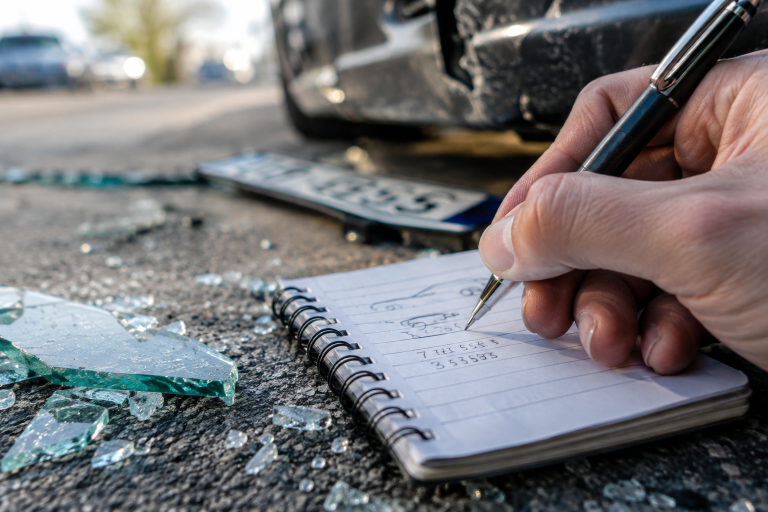
One of the most valuable things you can do after a hit-and-run accident is record everything you remember about the fleeing vehicle.
You do not need a complete license plate number or a perfect description for your observations to be useful. Investigators may be able to combine several small details with witness accounts, surveillance footage, or physical evidence.
Vehicle Information Worth Recording
- The vehicle’s make, model, color, and body style.
- Its approximate year or age, if recognizable.
- Any visible license plate numbers or letters.
- The license plate’s state or distinctive appearance.
- Existing damage, missing parts, decals, or unusual accessories.
- Distinctive wheels, roof racks, or window tint.
- The direction the vehicle traveled after the collision.
- The nearest intersection, street, or recognizable landmark.
- The approximate time and surrounding traffic conditions.
- A description of the driver, if you actually saw that person.
Accuracy is more important than certainty. If you believe the vehicle was dark blue but are not completely sure, describe it as possibly dark blue rather than presenting an uncertain detail as a fact.
Writing down these observations immediately, or recording a voice memo when safe, can help preserve details before they fade from memory.
Seek Medical Attention and Preserve Injury Records
Not every accident-related injury becomes apparent immediately. Adrenaline, shock, and the confusion surrounding a collision can make it difficult to recognize symptoms at the scene.
Headaches, dizziness, neck pain, back pain, numbness, and confusion may indicate injuries that deserve medical evaluation. Some symptoms can develop or become more noticeable in the hours or days following an accident.
Seek appropriate medical attention, especially when symptoms are persistent, worsening, or concerning. Severe symptoms, such as loss of consciousness, significant confusion, or difficulty breathing, require urgent evaluation.
Medical Documents to Keep
- Emergency room or urgent care discharge paperwork.
- Physician evaluations and treatment recommendations.
- Prescription information and medication receipts.
- Diagnostic testing records.
- Physical therapy or follow-up appointment documentation.
- Medical bills and insurance statements.
- Records of missed work or activity restrictions.
Keeping these documents organized helps establish a timeline of symptoms, treatment, and recovery. It can also provide important information when discussing accident-related expenses with an insurance company.
Gather Witness Statements, Camera Footage, and Physical Evidence
When the responsible driver cannot immediately be identified, independent evidence becomes especially important.
Witnesses, nearby cameras, and physical damage may help establish how the collision occurred and provide clues about the vehicle involved.
Speak With Potential Witnesses
If someone witnessed the accident, politely ask for their name and contact information. You can also ask them to briefly describe what they observed.
Nearby motorists, pedestrians, cyclists, and employees of surrounding businesses may have noticed details that you missed.
Some drivers may also have dashcam recordings that captured the collision or the fleeing vehicle.
Look for Nearby Surveillance Cameras
Businesses, parking garages, gas stations, and residential properties sometimes have security cameras facing nearby roads or parking areas.
If you notice a potential camera, make a note of its location and ask the property owner or business to preserve any relevant footage.
Because recordings may be automatically deleted or overwritten, prompt requests can be particularly helpful. However, property owners may have policies governing whether footage can be released directly to individuals.
Photograph the Accident Scene
When it is safe, take photographs from several angles. Include both wide images showing the surrounding area and close-up images documenting specific damage.
Useful photographs may include:
- Damage to your vehicle or other property.
- Broken headlights, mirrors, or detached vehicle parts.
- Paint transfer or unusual markings.
- Debris scattered across the roadway.
- Tire marks or other visible roadway evidence.
- Traffic signals, road signs, and lane markings.
- Nearby intersections and possible camera locations.
- Weather, lighting, and visibility conditions.
Professional crash investigators examine physical evidence such as vehicle damage, roadway marks, and struck objects when reconstructing collisions. The National Highway Traffic Safety Administration’s Crash Investigation Sampling System provides additional information about federal crash-investigation practices.
Preserve damaged clothing, helmets, bicycle components, or detached vehicle parts whenever possible. These items may contain information about the impact and should not be discarded prematurely.
Report the Hit-and-Run and Contact Your Insurance Company
Reporting a hit-and-run accident creates an official record and allows law enforcement to begin evaluating available information.
When speaking with an officer or dispatcher, clearly explain that the other driver left the scene. Provide the facts you remember without speculating about details you did not observe.
Information to Request From Law Enforcement
- The accident or incident report number.
- The name of the responding agency.
- The officer’s name or identifying information, when available.
- Instructions for obtaining a copy of the report.
- Information about submitting additional evidence.
The Mobile Police Department provides information about accident reports and crashes involving drivers who leave the scene through its frequently asked questions.
Understanding Potential Insurance Coverage
Even if you never identify the fleeing driver, certain insurance coverages may help cover accident-related expenses.
Depending on the circumstances, relevant coverage may include:
- Uninsured motorist coverage: May apply to certain injuries involving an unidentified driver, subject to Alabama law, policy provisions, and applicable proof requirements.
- Collision coverage: May help pay for covered vehicle damage, subject to deductibles and policy limitations.
- Medical payments coverage: May provide benefits for eligible medical expenses when included in the policy.
Coverage is not automatic simply because a driver leaves the scene. Policy language, the type of loss, the available evidence, and Alabama insurance requirements can affect whether a claim qualifies.
Notify your insurer promptly, keep your claim number, and save copies of written communications. Before signing settlement agreements or releases, make sure you understand what rights or claims the documents may affect.
Common Mistakes to Avoid After a Hit-and-Run
People involved in hit-and-run accidents sometimes make decisions while frightened, frustrated, or overwhelmed. Although these reactions are understandable, certain actions can make an already difficult situation more complicated.
- Chasing the driver: Following a fleeing vehicle may place you and others in danger.
- Delaying documentation: Waiting to photograph damage or identify witnesses can result in lost evidence.
- Discarding damaged property: Broken components and personal belongings may contain useful information.
- Posting accusations online: Publicly identifying someone without sufficient evidence can create additional problems.
- Guessing about the accident: Speculation about speed, driver behavior, or vehicle identity may undermine an otherwise accurate account.
- Ignoring medical symptoms: Delaying appropriate medical attention may affect your health and complicate documentation.
- Missing important deadlines: Insurance policies and legal procedures may require reporting or filing.
When information is uncertain, acknowledge that uncertainty. A consistent, factual account is more useful than one that includes unsupported assumptions.
Special Concerns for Pedestrians and Cyclists
Hit-and-run collisions can be particularly serious for pedestrians and cyclists because they have little physical protection against an approaching vehicle.
In addition to seeking medical attention and reporting the incident, pedestrians and cyclists should document the surrounding environment as thoroughly as possible.
Important evidence may include:
- Crosswalks, sidewalks, and bicycle lanes.
- Traffic lights and pedestrian crossing signals.
- Street lighting and visibility conditions.
- Nearby parked vehicles or other visual obstructions.
- Damage to bicycles, helmets, clothing, or personal belongings.
- Witness statements and available camera footage.
Some incidents involve a driver causing a cyclist or pedestrian to fall without making direct contact. These situations can present additional challenges because physical damage alone may not establish what happened.
Witness testimony, surveillance footage, and a detailed description of the driver’s actions may be particularly important in documenting a non-contact incident.
How to Build an Organized Hit-and-Run Evidence File
After the immediate emergency, an organized record can make future conversations with law enforcement, medical providers, and insurance representatives easier.
Consider maintaining a digital folder with backup copies and a separate folder for original paper documents.
What to Include in Your Evidence File
- Police reports and incident numbers.
- Photographs and videos from the accident scene.
- Witness names and contact information.
- Notes describing the fleeing vehicle.
- Medical records, bills, and prescriptions.
- Receipts for accident-related expenses.
- Vehicle repair estimates and invoices.
- Insurance correspondence and claim numbers.
- Documentation of missed work or lost income.
- A personal journal describing symptoms, appointments, and activity limitations.
Give digital files descriptive names that include dates whenever possible. For example, a photograph labeled with the accident date and location will be easier to identify later than an image with a generic file number.
Keep original photographs and videos whenever possible, since original files may contain useful metadata. Store copies separately so important information is not lost if a device is damaged or replaced.
Frequently Asked Questions About Hit-and-Run Accidents in Mobile
What if I only remember part of the license plate?
A partial license plate number can still provide a useful investigative lead. Combined with the vehicle’s color, make, damage, direction of travel, and the approximate time of the collision, even a few characters can help narrow the possibilities.
What if the driver caused an accident without hitting my vehicle?
Non-contact accidents can still raise questions about another driver’s responsibility. Preserve witness information, photographs, video recordings, and notes explaining what caused you to brake, swerve, or otherwise react.
Whether compensation is available depends on the facts, applicable law, and insurance policy requirements.
Can I file an insurance claim if the hit-and-run driver is never found?
Possibly. Some insurance policies cover certain losses involving unidentified drivers. However, eligibility depends on the type of coverage you purchased, the circumstances of the accident, applicable Alabama law, and the evidence available.
Contact your insurer promptly to understand its reporting requirements and the documentation needed to evaluate your claim.
Should I seek medical care if I feel fine immediately after the accident?
Not every injury produces immediate symptoms. If you develop pain, dizziness, headaches, confusion, or other concerning symptoms, seek appropriate medical evaluation. Serious or rapidly worsening symptoms require urgent attention.
How long should I keep my accident records?
Keep accident-related records while insurance claims, medical treatment, investigations, or potential legal matters remain unresolved. Because retention needs and legal deadlines vary, avoid discarding important documents without first confirming they are no longer needed.
Conclusion: Protect Your Safety and Preserve the Evidence
A hit-and-run accident in Mobile, Alabama, can create uncertainty, especially when the responsible driver disappears before anyone can identify them. However, taking the right steps early can help protect your well-being and preserve information that may become important later.
Prioritize safety, obtain medical attention when needed, report the incident, photograph the scene, identify potential witnesses, and organize your records. Even when the fleeing driver is not immediately located, accurate documentation can help investigators evaluate the collision and assist insurers in determining what coverage may be available.
Above all, remember that protecting yourself and preserving reliable evidence matter more than trying to pursue the driver. A careful, organized response can make the aftermath of a difficult accident more manageable.

