
Please read my disclosure policy to understand how I work with companies and individuals. Linking to a specific site does not imply endorsement of all of their services or content.
Key Takeaways
- Long-distance caregiving can include planning, advocacy, scheduling, financial organization, and emotional support.
- A simple written care plan helps family members respond more calmly when needs change.
- Local friends, neighbors, medical providers, and caregivers can provide important in-person perspective.
- Regular communication should strengthen your relationship, not feel like a daily inspection.
- Emergency planning and clear task assignments can reduce confusion during stressful situations.
Long-distance caregiving is real caregiving. If your parent lives in Sarasota, Longboat Key, or another nearby Gulf Coast community while you live elsewhere, you may still play an important role in coordinating appointments, organizing information, arranging help, and providing steady emotional support.
Families considering elder home care Sarasota can look at locally available services when determining how much in-person assistance an older parent may need. A Lending Hand is a Sarasota-based, family-owned provider serving Sarasota and surrounding communities, including Longboat Key. Its services include companion care, personal care, dementia and Alzheimer’s care, respite care, and transition and recovery assistance. The company also works with seasonal residents and can include out-of-town family members in care planning, which can be particularly helpful when adult children are coordinating support from another city or state.
Table of Contents
- What Long-Distance Caregiving Looks Like
- Signs More Support May Be Needed
- Building a Simple Care Plan
- Creating a Local Support Team
- Staying Connected From Afar
- Planning for Sarasota’s Seasonal Schedules
- When In-Home Support Makes Sense
- Preparing for Emergencies
- Managing Guilt and Caregiver Stress
What Long-Distance Caregiving Looks Like
Living in another city or state does not prevent you from being an active caregiver. Your role may include ordering supplies, tracking prescription refills, answering insurance questions, scheduling transportation, joining care discussions, managing paperwork, or keeping siblings and other relatives informed. Background information about family caregiving can also help families understand the many responsibilities that caregiving may involve.
Whenever possible, keep your parent at the center of decisions. Ask what kind of help feels useful, what privacy matters to them, and which routines they most want to preserve. Independence does not have to be all-or-nothing. Sometimes a small amount of support makes it easier for an older adult to remain safely and comfortably at home.
Signs More Support May Be Needed
Changes often happen gradually. One unpaid bill, an untidy kitchen, or a missed phone call does not automatically mean a parent can no longer live independently. When several changes begin appearing together, however, it may be time to check in more closely.
Possible Signs to Discuss
- Unopened mail, unpaid bills, or growing confusion about routine paperwork.
- Missed appointments, medication mix-ups, or difficulty obtaining refills.
- Food spoiling, skipped meals, unexplained weight changes, or concerns about hydration.
- Falls, frequent stumbles, difficulty getting up, or new problems moving around the home.
- Withdrawal from friends, noticeable memory changes, or declining personal hygiene.
Approach these changes with curiosity rather than accusation. Ask what has become difficult and what might make daily life easier. A medical review, home-safety evaluation, transportation help, meal assistance, or a few hours of weekly support may address the concern without requiring a major lifestyle change.
Building a Simple Care Plan
Create one shared document that is detailed enough to be useful but simple enough to consult during an urgent situation. Store sensitive information securely and make sure the people who may need the plan know where to find it.
- Health details: Current medications, allergies, physicians, pharmacy information, insurance information, and mobility needs.
- Daily routine: Preferred meal times, sleep patterns, activities, transportation needs, and communication preferences.
- Important contacts: Nearby relatives, trusted neighbors, friends, building staff, physicians, and care providers.
- Documents: Where advance directives, powers of attorney, insurance cards, and other essential records are kept.
- Responsibilities: Clear assignments for bills, appointments, family updates, travel arrangements, and emergency decisions.
Review the plan periodically rather than waiting until a crisis occurs. An arrangement that works well today may need to change after an illness, fall, hospitalization, medication change, or decline in mobility.
Creating a Local Support Team
A distant adult child should not have to be the only person monitoring a parent’s well-being from afar. Sarasota-area families can benefit from having trusted people nearby, particularly when a storm, travel delay, illness, or unanswered phone call creates concern.
Your local team might include a nearby relative, trusted neighbor, physician, pharmacist, friend from a faith community, senior-center contact, professional caregiver, or care manager. Talk with each person about what they are comfortable doing. One neighbor might be willing to check whether your parent is home after an unanswered call, while another person may be able to provide occasional transportation.
Share only the information each person needs, and make sure your parent understands who is involved. Whenever possible, build the support network with your parent rather than around them.
Staying Connected From Afar
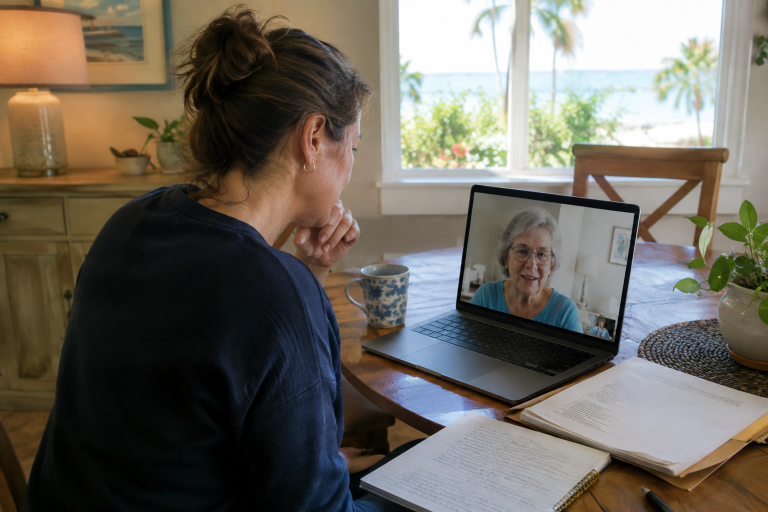
Calls work best when they still feel like part of your relationship rather than a medical checklist. Ask about a favorite restaurant, family news, a walk by the water, a television show, church activities, or plans for the week alongside questions about appointments and practical needs.
A regular call or video-chat schedule can provide consistency without making every conversation feel urgent. Families can also use a shared calendar for appointments and visits and keep a running list of questions for the next medical conversation.
With your parent’s permission, you may also be able to join medical appointments or care-planning discussions remotely. These long-distance caregiving tips offer practical guidance and additional ideas for organizing responsibilities and staying involved when you do not live nearby.
Planning for Sarasota’s Seasonal Schedules
Many residents of Sarasota and Longboat Key divide their time between Florida and another home. For families providing care from a distance, that can add another layer of planning.
Care arrangements should follow the older adult’s actual schedule, not assume every month will look the same. Plan ahead for seasonal arrivals and departures, particularly when medications, mobility equipment, medical providers, transportation, or caregiver schedules may change.
Before a parent travels, confirm where they will be staying, which prescriptions and supplies they need to bring, who can help during the trip, and what assistance will be available shortly after arrival. If professional support will be needed during part of the year, arranging it before the seasonal move can prevent rushed decisions.
When In-Home Support Makes Sense
Professional in-home support may become useful when ordinary daily tasks are getting harder, isolation is increasing, family visits are inconsistent, or a nearby family caregiver needs dependable relief.
The appropriate level of assistance varies considerably. One person may primarily benefit from companionship, transportation, meal preparation, or errands. Someone else may need assistance with personal routines, mobility, dementia-related needs, or support after returning home from a hospital stay.
When comparing providers, ask specific questions about how they screen and match caregivers, how they handle scheduling changes, who responds after regular business hours, what happens when the usual caregiver is unavailable, and how family members living elsewhere receive updates.
You should also understand exactly what type of care is being offered and whether the provider’s services fit your parent’s needs. Setting clear expectations early can prevent misunderstandings later.
Preparing for Emergencies
Write an emergency plan before anyone needs to use it. Trying to locate important information while you are hundreds or thousands of miles away during a crisis can make an already stressful situation harder.
Your emergency plan may include:
- Your parent’s full home address and important entry instructions.
- Current medications and allergies.
- Physician and pharmacy contact information.
- The preferred hospital, when appropriate.
- Local and out-of-town emergency contacts.
- The location of a backup key, if one is available.
- Important insurance information.
- The name of the family member responsible for updating everyone else.
Local contacts should also understand when a situation requires calling 911 or another emergency service immediately rather than waiting for an out-of-town relative to respond.
For Sarasota-area families, hurricane and severe-weather preparation should also be part of the conversation. Know whether your parent plans to stay home or evacuate, how you’ll arrange transportation, what medications and supplies you’ll need, and which nearby person can check on them if family members can’t travel.
Managing Guilt and Caregiver Stress
Distance can create guilt, particularly when a parent’s needs change quickly. You may wonder whether you should visit more often, move closer, or handle more responsibilities yourself.
Being far away does not mean you are uninvolved, just as living nearby does not mean one family member should have to do everything. Divide responsibilities according to each person’s location, availability, skills, and relationship with your parent.
One sibling might handle finances, another may coordinate medical appointments, and someone living nearby might visit more frequently. Professional help can fill gaps that relatives cannot reasonably cover.
Caregiving plans also need room for the caregiver’s health, responsibilities, finances, and family life. Accepting help is often part of creating a plan that can continue over time.
Common Questions About Long-Distance Caregiving
Can I be a caregiver if I live in another state?
Yes. Long-distance caregivers can coordinate appointments and services, manage paperwork, participate in care discussions, organize information, communicate with local helpers, and provide valuable emotional support even when they cannot visit every day.
What if my parent refuses help?
Start with the specific concern rather than proposing a complete change in lifestyle. For example, you might talk about transportation after a recent driving concern or offer weekly housekeeping if maintaining the home has become difficult. Small changes may feel less threatening than suggesting that a parent suddenly needs extensive care.
If there is an immediate health or safety risk, contact an appropriate medical professional or emergency resource.
How often should I call?
There is no universal schedule. Some families benefit from daily contact, while others may prefer calls several times a week. Consistency and the quality of the interaction generally matter more than following an arbitrary number of calls.
How can I know what is really happening when I live far away?
Regular conversations with your parent matter, but they don’t have to be your only source of information. With your parent’s permission, trusted local friends, relatives, medical professionals, caregivers, or other members of the support network can help you recognize changes that may not be obvious during a phone call.
Thoughtful long-distance caregiving combines reliable communication, strong local relationships, flexible support, preparation, and respect for your parent’s choices. With a clear plan and trustworthy people nearby, living far away does not have to prevent you from remaining meaningfully involved in an aging parent’s life.

