
Please read my disclosure policy to understand how I work with companies and individuals. Linking to a specific site does not imply endorsement of all of their services or content.
Key Takeaways
- Eliminate sources of standing water to disrupt the mosquito life cycle in your Charlotte yard.
- Regular landscape and yard maintenance are crucial for keeping mosquito populations low.
- Physical barriers, personal protection, and local pest professionals make a major difference.
- Integrate natural solutions to work with Charlotte’s environment and support long-term mosquito management.
As the warm weather returns to Charlotte, North Carolina, residents look forward to spending more time outdoors. However, with summer’s arrival comes the unwelcome presence of mosquitoes. These pests are not only a nuisance but also pose potential health risks. Taking steps towards mosquito control in Charlotte is essential for protecting your backyard gatherings, family picnics, and peaceful evenings on the porch.
Charlotte’s humid climate and rainy spells create ideal conditions for mosquitoes to thrive. Local homeowners face unique challenges each summer, from maintaining ponds and creeks to dealing with lush landscaping that provides mosquitoes with shelter and breeding grounds. This guide offers practical, locally relevant strategies to minimize mosquito activity and reclaim your outdoor spaces.
In addition to tackling mosquitoes, healthy lawns are a foundation for outdoor comfort and enjoyment throughout the region. Residents who value well-kept yards often turn to a weed control service for ongoing lawn health and beauty. Combining these services can maximize your outdoor living experience and keep pests at bay all season long.
Eliminate Standing Water
Few things attract mosquitoes faster than the shallow, stagnant water that often collects after Charlotte’s summer thunderstorms. From forgotten flowerpots to clogged gutters and open buckets, standing water provides everything mosquitoes need to breed. Conduct weekly inspections around your home, tipping over items that collect rainwater, emptying birdbaths, and frequently refreshing water in outdoor pet bowls. Unused tires, children’s toys, and even bottle caps can hold enough water to support hundreds of mosquito larvae.
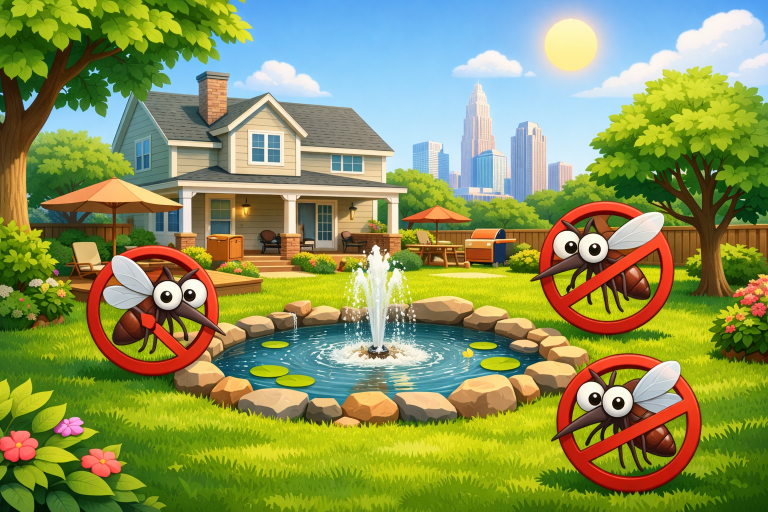
Ponds or decorative water features, which are common in Charlotte landscapes, should have their water agitated with bubblers or fountains to deter mosquitoes. For larger ponds, adding a small population of native fish, such as Gambusia, can help naturally control larvae without chemicals. For more detailed guidance, resources like the Centers for Disease Control and Prevention (CDC) offer comprehensive advice for homeowners.
Maintain Your Yard and Landscaping
Vibrant lawns and gardens are a source of pride in Charlotte, but they can also give mosquitoes the cool, shaded conditions they love. Mow the lawn regularly and trim back dense shrubs, where adult mosquitoes hide during the day. Remove piles of leaves and plant debris promptly. After one of Charlotte’s sudden storms, check for brush or debris that could hold moisture and create a haven for mosquitoes.
Mulching gardens can help retain soil moisture for plants, but avoid thick layers right up against house foundations or patios, as they can harbor moisture and mosquitoes. A balance between healthy landscaping and minimized mosquito habitat is achievable with diligence and routine care. For more lawn and yard maintenance ideas relevant to local conditions, see this Gardening Know How guide.
Install Physical Barriers
Keeping mosquitoes outside starts with robust physical barriers, especially during the hot Carolina evenings when residents want to keep doors and windows open. Regularly inspect window and door screens for any holes or loose edges and repair them promptly. For outdoor living spaces such as screened porches, verify that all screens fit tightly to their frames to block even the smallest pests. In Charlotte neighborhoods where outdoor entertaining is popular, fully screened patios and gazebos are worth the investment for reliably mosquito-free relaxation.
Utilize Outdoor Fans
Mosquitoes are notoriously weak fliers and easily discouraged by air movement. Strategically placed fans can make patios, decks, and picnic areas less appealing to mosquitoes. Position fans at ground level, where mosquitoes are most likely to fly, and set them to a medium to high setting for maximum effectiveness. This is a simple, chemical-free solution ideal for Charlotte’s warm and breezy evenings.
Apply Personal Repellents and Protective Clothing
Even with diligent yard control, you may encounter mosquitoes during outdoor activities in Mecklenburg County parks, Lake Norman’s shores, or your own yard. Apply EPA-approved insect repellents containing active ingredients such as DEET, picaridin, or oil of lemon eucalyptus. Wearing lightweight, light-colored, long-sleeved shirts and long pants offers additional protection, especially at dusk and dawn, when mosquitoes are most active. For safety information and recommendations, the EPA’s repellent resources are a valuable reference.
Introduce Natural Predators
Charlotte’s environmental diversity means many residents have ponds, rain gardens, or other water features that could benefit from natural mosquito predators. Native fish, such as Gambusia (mosquito fish), are natural predators of mosquito larvae and can be introduced into outdoor ponds. Encouraging frogs, dragonflies, and birds by planting native vegetation and providing shelter can also help regulate mosquito populations without synthetic chemicals and support Charlotte’s local ecosystem.
Seek Professional Assistance
If you find your mosquito problem persists despite best efforts, or if your property backs onto natural wetlands or water bodies unique to Charlotte, engaging a local pest management expert is a smart next step. Professionals can assess your specific conditions and apply targeted, environmentally sensitive treatments that are effective and safe for children, pets, and pollinators. Local knowledge is particularly valuable for identifying breeding hotspots and tailoring strategies that suit Charlotte’s unique climate and geography.
By following these mosquito control measures, Charlotte homeowners can enjoy a safer, more comfortable summer outdoors and have peace of mind for their families and community.

Related Articles
-
WORX GT Revolution 20V 12″ String Trimmer/Edger/Mini Mower Giveaway Co-Host Page -
Eat Smart Precision Pro Multifunction Digital Kitchen Scale Giveaway Co-Host Page -
AcuRite Pro 5-in-1 Weather Station with HD Display and Lightning Detector Giveaway Co-Host Page -
QMT Limited Edition Holly Windchime Giveaway Co-Host Page
