
Please read my disclosure policy to understand how I work with companies and individuals. Linking to a specific site does not imply endorsement of all of their services or content.
How Performing Arts Venues Help Culture Thrive

Music, dance, theater, and other performing arts have a special way of bringing people together. A live performance can introduce us to a different culture, reconnect us with our own traditions, and create memories shared across generations.
Mariachi music is a wonderful example. Its vibrant sound carries a rich history of Mexican culture and tradition, while youth mariachi programs give a new generation an opportunity to experience that heritage firsthand. Families looking for local music opportunities may discover everything from community academies and school programs to workshops and public performances.
These experiences often become even more meaningful when they are supported by a dedicated performing arts venue. Beyond providing a stage, these community spaces can connect young musicians with audiences, professional facilities, educational opportunities, and other artists.
A premier performing arts venue can be much more than a place for concerts. At its best, it becomes a cultural gathering place where established artists, students, families, and community organizations can share their talents and traditions.
Connecting Communities Through the Arts
One of the greatest strengths of live performing arts is their ability to create shared experiences. An audience may include grandparents who have loved a particular musical tradition for decades, parents introducing that tradition to their children, and people experiencing it for the first time.
Community performances can help preserve familiar traditions while also encouraging curiosity about cultures outside our own. A youth mariachi concert, for example, offers entertainment while introducing audiences to distinctive instruments, clothing, musical styles, storytelling, and history.
Celebrating Cultural Heritage
Performing arts organizations can help keep cultural traditions visible and accessible. Public concerts, festivals, educational programs, and workshops allow audiences to experience traditions that might otherwise remain limited to individual families or communities.
There is something especially powerful about seeing young musicians take part in these experiences. When children and teens perform traditional music, they are doing more than learning notes. They are participating in a living cultural tradition and helping carry it forward.
For audiences, those performances can inspire appreciation, curiosity, and even a desire to learn more. For young performers, stepping onto a professional stage can build confidence and reinforce that their work and heritage matter.

Creating Educational Opportunities for Young Artists
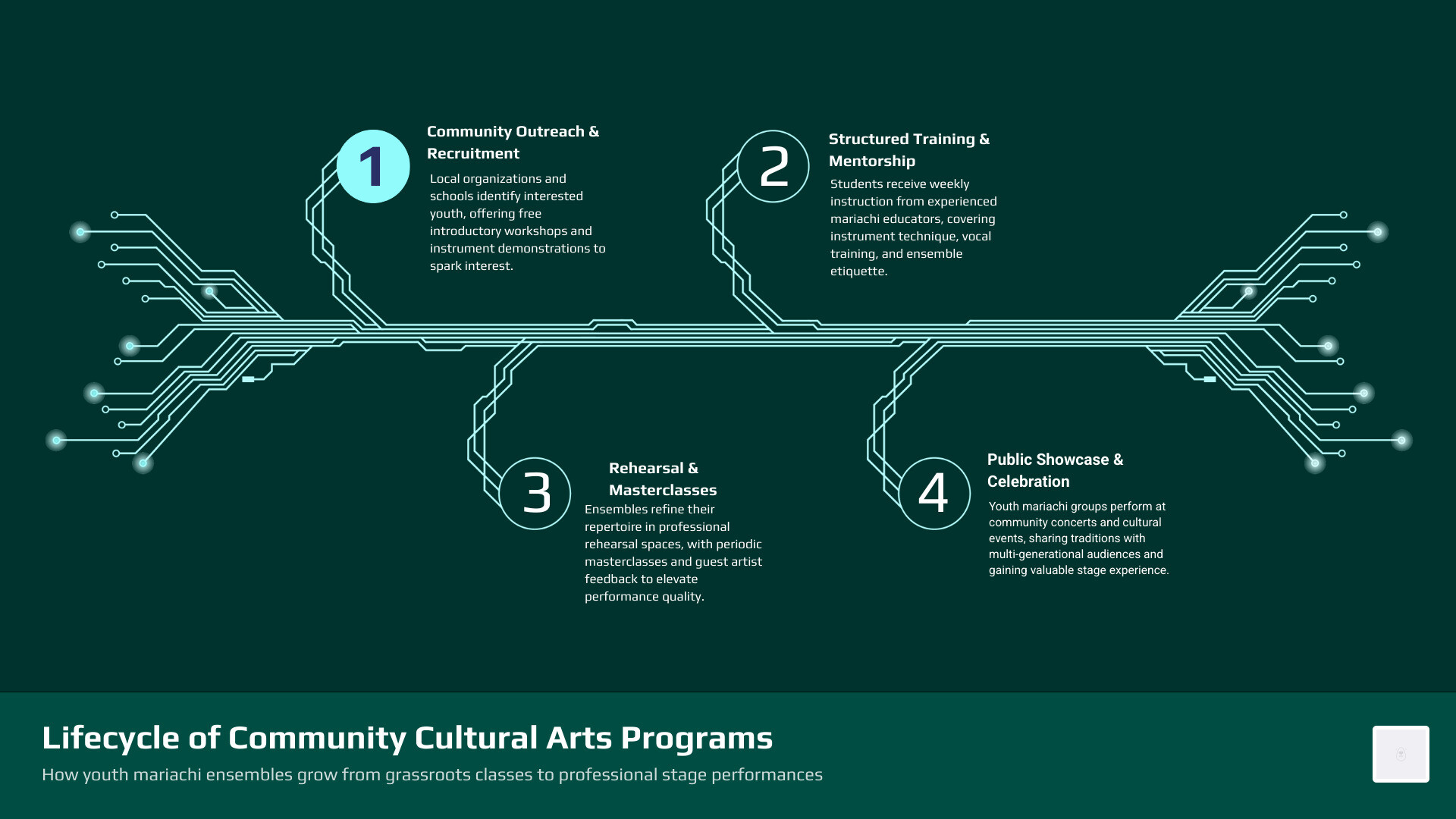
Many performing arts venues partner with schools, music academies, nonprofits, and community organizations to provide educational experiences for young people. Depending on the organization, these opportunities may include:
- Workshops with professional musicians
- Masterclasses and demonstrations
- Rehearsal opportunities
- Student performances
- Mentorship programs
- School field trips and educational concerts
- Community festivals and cultural celebrations
Experiences like these allow students to see what happens beyond the classroom or rehearsal room. They learn how musicians prepare for live performances, work together as an ensemble, respond to an audience, and adapt to a professional performance environment.
Youth Mariachi and the Preservation of Musical Traditions
Youth mariachi programs provide a particularly meaningful combination of music education, cultural history, teamwork, and performance experience. Students may begin by learning basic chords, rhythms, melodies, or vocal techniques before eventually performing as part of a full ensemble.
Along the way, they develop skills that reach beyond music. Rehearsing with a group requires listening, patience, discipline, preparation, and cooperation. Public performances can also help students become more comfortable speaking or performing in front of others.
Learning the Instruments of Mariachi
Traditional mariachi ensembles feature several distinctive instruments, each contributing something different to the overall sound.
- Violin: Often carries melodies and harmonies throughout a song.
- Trumpet: Adds the bright, powerful brass sound associated with many mariachi performances.
- Vihuela: A small guitar-like instrument that helps provide rhythmic and harmonic support.
- Guitarrón: A large acoustic bass instrument that gives the ensemble much of its low-end foundation.
- Guitar: Supports the rhythm and harmony of the ensemble.
- Harp: Included in some traditional ensembles and regional styles.
Vocal training is also an important part of mariachi. Students may learn to sing individually and as part of an ensemble, strengthening their understanding of melody, rhythm, phrasing, and musical storytelling.
Why Youth Performances Matter
Watching young people perform traditional music can be a memorable experience for an entire community. Their performances connect generations while giving students an opportunity to demonstrate the skills they have worked hard to develop.
Traditional attire, instrumentation, and repertoire can add another layer to that experience. For young musicians, performing these works creates a tangible connection between history and the present day.

Making Youth Performing Arts More Accessible
Not every child begins music education with the same resources. Instruments, lessons, transportation, uniforms, and performance costs can quickly become expensive for families.
That is why community-supported arts programs can make such a difference. Many nonprofit programs rely on a combination of tuition, donations, grants, sponsorships, fundraising, and volunteer support. Some also provide scholarships or loan instruments to students who might otherwise be unable to participate.
Performing arts venues can support this accessibility by partnering with community programs, providing performance opportunities, offering educational programming, and introducing local families to available resources.
Different Types of Youth Music Programs
Families looking for youth mariachi or other cultural music opportunities may encounter several different program structures.
- Community academies: Often emphasize accessibility, cultural education, musical development, and community involvement.
- School-based programs: Offer students opportunities to learn and perform as part of their regular education or extracurricular activities.
- Conservatory-style programs: May provide more intensive instruction in technique, music theory, sight-reading, and performance.
- Performance ensembles: Frequently focus on developing repertoire and preparing students for concerts, festivals, and community events.
The right program depends on a student’s age, experience, goals, schedule, and learning style. A child interested primarily in exploring their cultural heritage may have different needs from a student considering advanced music study.
What Young Musicians Gain From Performing
The experience of preparing for a live performance can teach lessons that extend well beyond the stage. Students learn that every member of an ensemble contributes to the final result. They also experience the satisfaction that comes from practicing something repeatedly and eventually sharing it with an audience.
Young performers may develop:
- Greater confidence
- Musical and creative skills
- Teamwork and cooperation
- Discipline and perseverance
- Stage presence
- Connections with mentors and peers
- A stronger appreciation for cultural traditions
For some students, music remains an enriching lifelong hobby. Others may eventually pursue advanced education or professional opportunities in the arts. Both paths begin with giving young people a place to learn, practice, and perform.
Frequently Asked Questions About Youth Performing Arts Programs
What ages can participate in youth cultural arts programs?
Age requirements vary by organization. Some programs begin with elementary-age students, while others focus on middle school and high school musicians. Programs may also divide students by experience level rather than age alone. Families should check individual program requirements before enrolling.
What instruments are commonly taught in youth mariachi?
Common instruments include violin, trumpet, vihuela, guitarrón, and guitar. Some ensembles also include harp. Singing is an important part of the tradition as well, so students may receive vocal instruction in addition to instrumental training.
Does a child need previous musical experience?
Not necessarily. Some youth mariachi programs welcome complete beginners, while more advanced performance ensembles may require an audition or previous experience. Beginning programs typically focus on foundational skills before introducing students to more difficult repertoire.
How do performing arts venues support youth education?
Venues may provide professional performance spaces, rehearsal areas, educational concerts, workshops, masterclasses, mentorship opportunities, discounted tickets, or partnerships with schools and nonprofit organizations. The exact offerings vary, but these programs can help connect young people with the broader performing arts community.
What should families look for when choosing a youth music program?
Consider the instructors’ experience, rehearsal schedule, program cost, age requirements, performance opportunities, instrument policies, and overall atmosphere. Families may also want to ask whether scholarships, instrument loans, or beginner classes are available.
Experience Culture Through Live Performance
A performing arts venue has the potential to become much more than a building with a stage. It can be a place where traditions are celebrated, young artists discover their abilities, families experience something meaningful together, and communities learn more about one another.
Youth mariachi beautifully demonstrates what can happen when cultural preservation and arts education come together. Each rehearsal, lesson, and performance helps a new generation develop its musical abilities while participating in a tradition that has been shared for generations.
Whether you are attending a cultural performance, introducing a child to music, or simply exploring something new, supporting live performing arts is one way to help these traditions continue to grow and thrive.

