
Please read my disclosure policy to understand how I work with companies and individuals. Linking to a specific site does not imply endorsement of all of their services or content.</p
Key Takeaways
- Missing teeth can affect chewing, speech, oral health, and confidence.
- Dental implants can support individual crowns, bridges, removable dentures, or full-arch restorations.
- The best tooth replacement option depends on oral health, jawbone support, medical history, lifestyle, and budget.
- Same-day dental implant treatment may be available for qualifying patients, but it is not suitable for everyone.
- Dental implants require ongoing professional care and consistent daily oral hygiene.
Taking care of our health becomes increasingly important as we move through different stages of life. While we often focus on nutrition, exercise, and regular medical appointments, dental health deserves just as much attention.
Losing a tooth can be an unexpected and sometimes discouraging experience. Whether tooth loss results from an injury, gum disease, decay, or another dental condition, it can affect everyday activities such as eating, speaking, and smiling comfortably.
Fortunately, modern dentistry offers several approaches to replacing missing teeth. Understanding the available treatments, their benefits, and their limitations can help you make a more informed decision about your oral health.
Patients in Scottsdale, Phoenix, and surrounding Arizona communities can explore dental implant options for missing teeth through ProSmile Dental Implant Center, including individual implant crowns, implant-supported bridges, dentures, and full-arch restorations.
Table of Contents
- Why Replacing Missing Teeth Matters
- Understanding Your Dental Implant Options
- Comparing Implants, Bridges, and Dentures
- Who Is a Candidate for Dental Implants?
- What to Expect During the Dental Implant Process
- Understanding Full-Arch Dental Implants
- Long-Term Dental Implant Care
- Understanding Treatment Costs
- Questions to Ask Your Dental Professional
- Frequently Asked Questions
Why Replacing Missing Teeth Matters
Missing teeth can affect much more than the appearance of your smile. Depending on the number and location of missing teeth, tooth loss may influence your ability to chew comfortably, pronounce certain words, and maintain a balanced bite.
When a natural tooth root is no longer present, the surrounding jawbone may also change over time. In some cases, neighboring teeth can gradually shift toward the empty space.
Potential consequences of tooth loss include:
- Difficulty chewing certain foods.
- Changes in speech or pronunciation.
- Shifting of neighboring teeth.
- Changes in bite alignment.
- Gradual bone loss in the affected area.
- Reduced confidence when smiling or socializing.
These experiences vary from person to person. Not every missing tooth requires immediate replacement, but a professional dental evaluation can help determine whether treatment would benefit your oral health and quality of life.
Understanding Your Dental Implant Options
Dental implants are surgically placed posts that provide support for replacement teeth. Rather than offering a single solution for every patient, implant dentistry includes several approaches based on the extent of tooth loss and individual treatment needs.
Single Dental Implants
A single dental implant can support a custom crown when one tooth is missing. Unlike a traditional dental bridge, this approach generally does not require neighboring teeth to be prepared as supports.
Suitability depends on the condition of the surrounding gums, jawbone, bite, and overall oral health.
Implant-Supported Bridges
When several neighboring teeth are missing, an implant-supported bridge may provide an alternative to replacing each missing tooth with an individual implant.
The number and placement of implants depend on the size of the gap, available bone, and anticipated chewing forces.
Implant-Supported Dentures
For people who have lost most or all of their teeth, implants may help improve the stability and retention of removable dentures.
This approach may be worth discussing if conventional dentures move during eating or speaking. Patients should also consider cleaning requirements, comfort, and the maintenance involved.
Fixed Full-Arch Dental Implants
A fixed full-arch restoration uses strategically positioned implants to support a complete set of replacement teeth in the upper or lower jaw.
Unlike removable dentures, fixed restorations are not intended to be removed by the patient during routine daily care. They still require specialized cleaning and regular professional maintenance.
Comparing Dental Implants, Bridges, and Dentures
Dental implants are not the only way to replace missing teeth. Traditional bridges and conventional dentures remain appropriate options for many patients.
The following comparison highlights some important differences to consider when discussing treatment with your dental professional.
| Treatment Option | How It Works | Important Considerations |
|---|---|---|
| Single dental implant | An implant supports an individual crown. | Requires surgery, adequate bone support, and healing time. |
| Traditional dental bridge | Replacement teeth are supported by neighboring teeth. | May require preparation of adjacent natural teeth. |
| Implant-supported bridge | Implants support several connected replacement teeth. | Requires individualized surgical and restorative planning. |
| Conventional denture | A removable appliance replaces multiple missing teeth. | May require adjustments as oral tissues change. |
| Implant-supported denture | Implants improve the retention of a removable denture. | Requires implant surgery and ongoing maintenance. |
| Fixed full-arch restoration | Implants support an entire arch of replacement teeth. | Requires comprehensive planning and specialized hygiene. |
The most extensive or expensive treatment is not necessarily the best choice. Your dental professional should help you evaluate the advantages, limitations, costs, and maintenance requirements of each appropriate option.
Who Is a Candidate for Dental Implants?
Dental implant treatment begins with an individualized assessment. Although implants may be suitable for many adults with missing teeth, several factors influence whether treatment can be performed safely and successfully.
A dental implant consultation may include an evaluation of:
- The number and location of missing or damaged teeth.
- Jawbone density and available bone volume.
- Gum health and signs of periodontal disease.
- Bite alignment and chewing forces.
- Existing dental restorations.
- Medical history and current medications.
- Tobacco use and other lifestyle factors.
- Ability to maintain consistent oral hygiene.
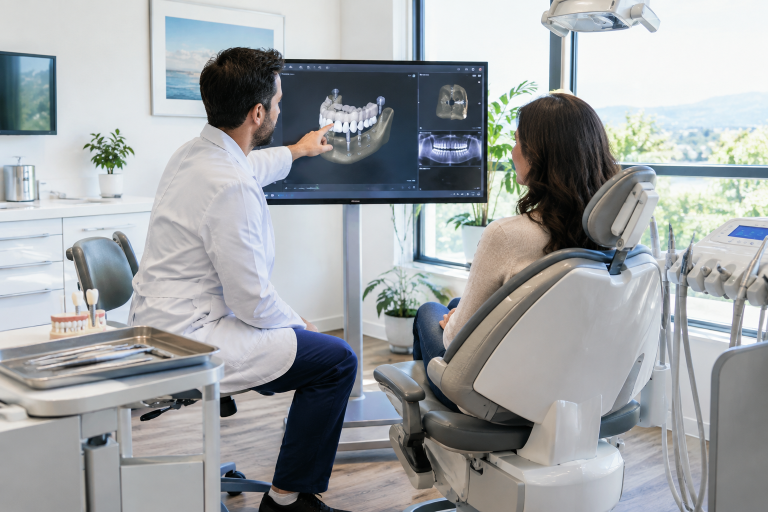
Diagnostic imaging may also help the dental team evaluate the jawbone and surrounding structures before developing a treatment plan.
Can You Get Dental Implants If You Have Bone Loss?
Limited jawbone support does not automatically mean that dental implants are impossible. Some patients may benefit from bone grafting or other preparatory procedures before implant placement.
Others may require treatment for gum disease, infection, or damaged teeth before moving forward.
The need for additional procedures depends on individual anatomy, oral health, and the proposed restoration.
What to Expect During the Dental Implant Process
Dental implant treatment generally involves several stages. The exact timeline varies depending on the patient’s health, the number of implants, and the complexity of the treatment.
1. Consultation and Treatment Planning
The dental team evaluates your oral health, reviews your medical history, discusses your goals, and determines which treatment options may be appropriate.
2. Preparatory Dental Care
Some patients require tooth extraction, bone grafting, periodontal treatment, or infection management before implants can be placed.
3. Dental Implant Placement
The implant posts are surgically placed into the jawbone according to the individualized treatment plan.
4. Healing and Integration
Following placement, the surrounding bone gradually heals and integrates with the implant. This process is known as osseointegration.
Healing may take several months, although the timeline depends on individual circumstances and the treatment approach.
5. Placement of the Final Restoration
When the dental team determines that the implants are ready to support the planned restoration, a custom crown, bridge, denture, or full-arch prosthesis is fitted.
6. Follow-Up and Maintenance
Regular professional appointments help monitor implant health, surrounding tissues, bite alignment, and the condition of the replacement teeth.
Are Same-Day Dental Implants Right for Everyone?
The possibility of receiving replacement teeth in a single appointment can be appealing, especially for patients concerned about spending an extended period without teeth.
However, same-day implant treatment is not appropriate for every patient. Factors such as bone quality, initial implant stability, infection, bite forces, and general health can influence eligibility.
It is also important to understand that receiving a temporary restoration on the day of implant placement does not mean that the entire healing process is complete.
Ask your dental professional to explain whether a same-day procedure would involve temporary or permanent replacement teeth and what restrictions may apply during recovery.
Understanding Full-Arch Dental Implants
People who have lost most or all of their teeth may benefit from discussing full-arch replacement options with an implant specialist.
The ProSmile Full-Arch System is designed for patients who need to replace an entire upper or lower arch of teeth. It may also be considered when remaining teeth have a poor long-term prognosis or conventional dentures do not provide the desired stability.
According to ProSmile Dental Implant Center, its coordinated treatment approach includes 3D imaging, digital planning, implant surgery, prosthetic design, and ongoing maintenance.
Full-arch treatment requires careful consideration of:
- Available jawbone and implant positioning.
- Facial appearance and smile design.
- Bite alignment and chewing function.
- Restoration materials.
- Access for daily cleaning.
- Long-term maintenance and repair requirements.
Patients should receive a clear explanation of the benefits, risks, alternatives, and anticipated costs before proceeding with extensive dental treatment.
How Long Do Dental Implants Last?
Dental implants can provide long-term support for replacement teeth, but their lifespan varies from person to person. No dental professional can guarantee that an implant or its restoration will last indefinitely.
It is also important to distinguish between the implant itself and the crown, bridge, or denture attached to it. A restoration may require repair or replacement even when the underlying implant remains functional.
Factors that can influence long-term implant health include:
- Daily brushing and appropriate cleaning between teeth.
- Regular professional dental examinations and cleanings.
- Management of gum disease.
- Tobacco use.
- Overall health and relevant medical conditions.
- Teeth grinding or excessive bite forces.
- The condition and design of the attached restoration.
Inflammation and infection can develop around dental implants. Contact your dental professional if you experience persistent bleeding, swelling, discomfort, or movement around an implant or restoration.
Dental implants should be viewed as a long-term commitment to oral health rather than a treatment that eliminates the need for future dental care.
Understanding Dental Implant Costs and Financial Considerations
For many individuals and families, the financial aspect of dental treatment is an important consideration. Dental implant costs vary considerably depending on the complexity of the procedure and the type of restoration selected.
Factors that may influence the total cost include:
- The number of implants required.
- Diagnostic imaging and consultation fees.
- Tooth extractions or preparatory procedures.
- Bone grafting or gum treatment.
- The type and materials of the final restoration.
- Anesthesia or sedation requirements.
- Follow-up appointments and future maintenance.
Before committing to treatment, request a written estimate that explains what is included and which additional expenses could arise.
Dental insurance coverage varies by policy. Some plans may cover portions of treatment, while others exclude certain implant-related procedures. Confirm coverage directly with your insurance provider and ask about available payment arrangements if needed.
When comparing treatment options, consider both the initial expense and the potential long-term maintenance costs.
Questions to Ask Before Getting Dental Implants
A dental consultation is an opportunity to understand your options and make decisions without feeling rushed. Consider bringing a written list of questions to your appointment.
- Which tooth replacement options are appropriate for my situation?
- What are the benefits and risks of each option?
- Do I have enough jawbone support for implants?
- Will I need bone grafting, extractions, or gum treatment?
- Would a removable or fixed restoration better suit my needs?
- Am I eligible for same-day treatment?
- How long is the expected treatment and recovery period?
- What will daily cleaning and professional maintenance involve?
- What is the estimated total cost of treatment?
- What happens if an implant or restoration develops complications?
A qualified dental professional should be willing to explain the available alternatives, answer your questions, and help you understand what treatment involves before you make a decision.
Frequently Asked Questions About Dental Implants
Can a dental implant replace just one missing tooth?
Yes. A single dental implant can support an individual replacement crown when the patient’s bone, gums, and overall oral health are suitable for treatment.
Are dental implants better than dentures?
Dental implants may offer greater stability for some patients, but they are not necessarily the best choice for everyone. Conventional dentures may be appropriate for individuals who prefer to avoid surgery or have other health or financial considerations.
Is dental implant surgery painful?
Dental implant surgery typically involves anesthesia to manage discomfort during the procedure. Some swelling, soreness, or bruising may occur afterward. Your dental team should provide individualized instructions for recovery and pain management.
Can older adults get dental implants?
Age alone does not necessarily determine whether someone is a candidate for dental implants. Oral health, bone support, medical history, healing ability, and other individual factors are important considerations.
Can dental implants fail?
Yes. Implant failure and other complications are possible. Infection, inadequate healing, bone loss, excessive forces, and other factors can affect outcomes. Regular dental care and appropriate treatment planning remain important.
Are same-day dental implants permanent?
Same-day treatment may involve placing implants and attaching temporary replacement teeth during the same appointment. Additional healing and restorative appointments may be necessary before the final restoration is completed.
What is the first step toward replacing missing teeth?
Schedule a comprehensive dental evaluation. Patients in the Scottsdale and Phoenix areas may wish to consult ProSmile Dental Implant Center to learn more about their available treatment options.
Final Thoughts: Investing in Your Oral Health and Quality of Life
Our dental health is an important part of our overall well-being. Being able to enjoy meals, speak comfortably, and smile with confidence can make a meaningful difference in everyday life.
If you are living with missing teeth, remember that there are several treatment options available. You do not need to make a decision before understanding the potential benefits, risks, costs, and long-term responsibilities associated with each approach.
Whether you ultimately choose dental implants, a traditional bridge, or dentures, the goal should be a treatment plan that supports your individual health needs, lifestyle, and financial circumstances.
Taking the time to ask questions and seek qualified professional guidance is an important step toward making an informed decision about your oral health.
This article is intended for general educational purposes and does not provide individualized dental or medical advice. Consult a qualified dental professional for diagnosis, treatment recommendations, and information specific to your circumstances.

