
Please read my disclosure policy to understand how I work with companies and individuals. Linking to a specific site does not imply endorsement of all of their services or content.
Key Takeaways
- Pay attention to repeated or unexplained signs that something may be wrong.
- Document injuries, behavioral changes, and conversations with staff.
- Ask direct questions about your loved one’s care and treatment.
- Report serious concerns promptly.
- Stay involved and continue asking questions when something does not seem right.
Families in Atlanta, Georgia, place loved ones in nursing homes expecting them to receive attentive, respectful care. Sometimes a concern begins with something small—a new bruise, a sudden change in mood, a missed medication, or a question that never seems to get a clear answer. One incident may have a reasonable explanation. But when those incidents begin to repeat, or the explanations do not seem to add up, it is worth paying closer attention. A nursing home abuse lawyer may be one option for families who want to better understand their rights after a serious injury or suspected pattern of mistreatment.
Not every injury, illness, or difficult day means that abuse or neglect has occurred. Older adults can have complex medical needs, difficulty communicating, or health conditions that increase the risk of falls, bruising, and skin injuries. At the same time, families do not need absolute proof before they start asking questions. If something does not seem right, it is reasonable to ask for information, request an explanation, document what you are seeing, and report a serious concern. Acting promptly and calmly can help protect your loved one while the situation is reviewed.
Why Patterns Matter
A single incident may have an innocent explanation. A pattern is different. Repeated falls, worsening hygiene, unexplained injuries, missing belongings, or noticeable changes in behavior may indicate a broader issue with a resident’s care.
You know your loved one. Pay attention to changes from their usual health, personality, mobility, and daily routines. When something happens, write down what staff members tell you and compare that explanation with what you personally observe, what appears in medical records, and any information you receive later. If the explanations keep changing or the same problem keeps happening, continue asking questions.
10 Warning Signs To Watch For
Any of the following signs may warrant a closer look, especially if they occur repeatedly, appear suddenly, or lack a clear explanation. Warning signs of elder abuse identified by the National Institute on Aging can include physical injuries, unsafe living conditions, changes in behavior, and unexpected financial losses.
- Unexplained bruises, cuts, burns, or fractures. Ask when the injury happened, who discovered it, and whether a doctor or other medical professional examined your loved one.
- Repeated falls or emergency room visits. Falls can happen even when someone is receiving appropriate care. However, repeated incidents are a reason to ask about supervision, mobility assistance, and whether the resident’s care plan needs to be changed.
- Pressure sores or wounds that are getting worse. Open or damaged areas of skin, particularly for someone with limited mobility, need appropriate assessment, monitoring, and treatment.
- Poor hygiene or soiled bedding. Dirty clothing, unwashed hair, poor dental care, unchanged bedding, or persistent odors may be signs that basic care needs are not being consistently met.
- Unexpected weight loss, dehydration, or missed meals. If your loved one suddenly stops eating or drinking normally or begins losing noticeable weight, ask why. There may be a medical explanation, but the change should be evaluated and nutritional support reviewed.
- Sudden confusion, weakness, unusual sleepiness, or loss of appetite. Do not assume a sudden change is simply part of getting older. Ask when it began, what may have changed, and whether the resident’s physician has been notified.
- Fear, withdrawal, anxiety, or distress around a particular person. Emotional mistreatment does not always leave a visible injury. Pay attention if your loved one suddenly becomes unusually quiet, frightened, or agitated around a particular caregiver or individual.
- Unsafe or unclean surroundings. Broken equipment, blocked walkways, poor sanitation, missing call devices, or inadequate lighting can create unnecessary risks for residents.
- Personal belongings that repeatedly go missing. Glasses, dentures, hearing aids, walkers, clothing, cash, and jewelry should not continually disappear without an effort to find them and an explanation of what happened.
- Unusual financial activity. Unexpected withdrawals, unpaid bills, new accounts, or unexplained changes involving a will, beneficiary designation, or access to bank accounts should be reviewed promptly.
How To Document Concerns
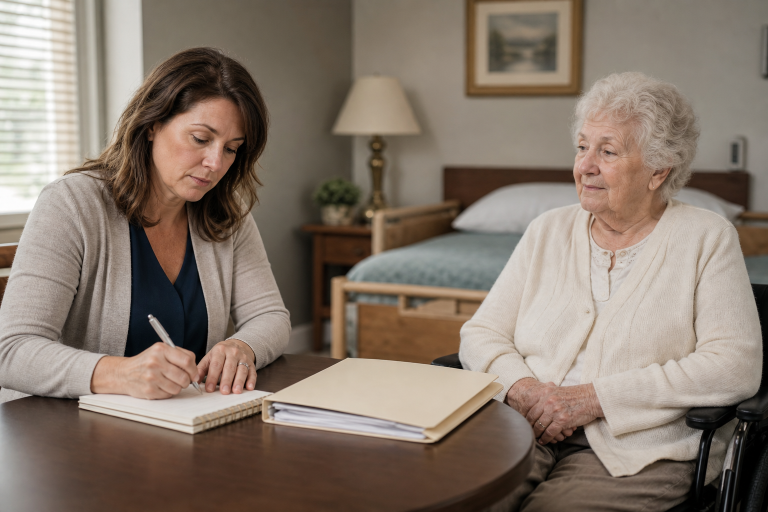
If you are concerned about your loved one’s care, good documentation can be extremely helpful. You do not need to investigate the situation yourself or try to determine exactly what caused it. Focus instead on recording what you actually see and hear.
Keep a dated log that includes the time, location, people present, and what you personally observed. When appropriate, photograph visible injuries or potentially hazardous conditions. Save emails, text messages, bills, care plans, medical information, and written complaints. You can also keep track of meaningful changes in weight, mobility, medications, behavior, and hospital visits. Stick with the facts rather than guessing about the cause.
Questions For Facility Staff
When something serious happens, general reassurance may not answer the questions a family has. It can help to ask specific questions such as:
- When was the problem first noticed?
- Who assessed the resident, and was a physician contacted?
- What treatment or monitoring is now in place?
- Was an incident report created?
- What does the resident’s current care plan require?
- What is being done to reduce the chance of this happening again?
- When should the family expect a written update?
Safety And Reporting Steps
If a resident is experiencing severe pain, difficulty breathing, serious bleeding, or another immediate safety threat, call 911 and seek emergency medical care.
For concerns that are not immediate emergencies, contact the charge nurse or facility administrator and request that the issue be documented. You may also want to contact the resident’s physician about unexplained changes in health and keep copies of any written reports or responses you receive.
Families can also report suspected mistreatment to the appropriate Georgia agency or seek assistance from a long-term care ombudsman. The steps for reporting suspected abuse or neglect described by the Administration for Community Living explain that Adult Protective Services, law enforcement, and ombudsman programs may each have a role depending on the circumstances.
Reviewing Atlanta-Area Facilities
Whether you are considering a nursing home for the first time or already have concerns about a facility, there is value in seeing the environment for yourself. When possible, visit at different times of the day, including during meals and shift changes.
Look at the everyday details. Do residents appear clean, comfortable, hydrated, and appropriately engaged? How do staff members speak to them? Are call devices accessible? Do employees answer questions directly and respectfully?
Ask how the facility handles falls, medication changes, pressure sores, missing belongings, and family notifications. Available inspection, staffing, complaint, and quality information can also provide useful context, but your own observations and conversations with staff matter too.
Common Family Questions
Does one bruise prove abuse?
No. Bruising can happen for many reasons, particularly in older adults. However, an injury that cannot be explained, repeated injuries, or an explanation that does not seem consistent with what happened deserves a closer look.
What if the resident cannot explain what happened?
A resident’s inability to explain an incident does not mean that a family cannot ask questions. Medical records, care plans, staff notes, incident reports, photographs, witness observations, and changes in behavior may all provide important information about what occurred.
Should the resident be moved immediately?
That depends on the resident’s immediate safety, medical needs, and the alternatives available. If your loved one is in immediate danger, emergency medical care and a safe environment come first. When circumstances allow, preserve important records and information before a transfer.
Conclusion
Families can be an important voice for loved ones living in Atlanta-area nursing homes. Pay attention to changes. Ask questions when something does not seem right. Keep good records, and do not be afraid to follow up when an answer is unclear or a concerning problem keeps happening.
One incident does not necessarily mean abuse or neglect has occurred. But a pattern of unexplained injuries, missed care, unsafe conditions, missing belongings, or emotional distress deserves attention. Staying involved and taking reasonable action early can help families better understand what is happening and, most importantly, help protect the safety and well-being of someone they love.

