Please read my disclosure policy to understand how I work with companies and individuals. Linking to a specific site does not imply endorsement of all of their services or content.
Trees are integral to our communities—providing shade, supporting biodiversity, and enhancing property value. Sustaining their health requires specialized attention, especially in fast-growing regions. Professional tree services offer expert solutions tailored to local environments, ensuring that trees not only survive but thrive. Their trained professionals address every aspect of tree care, helping homeowners and property managers enjoy healthy, safe landscapes for the long term.
Entrusting your landscape to a certified arborist goes beyond routine trimming; it ensures comprehensive care, anticipates potential issues, and promotes lasting tree vitality. The following sections outline arborists’ essential roles in long-term tree care strategies.
Who Are Arborists?
Arborists are specialized professionals with advanced knowledge in tree biology, maintenance practices, and pest management. Unlike general landscapers, arborists must undergo rigorous training and often achieve certification through organizations such as the International Society of Arboriculture (ISA). This expertise empowers them to accurately diagnose, treat, and prevent tree-related issues. Their work encompasses young and mature trees, customizing care plans to fit species-specific and site-specific needs. Professional tree services Frisco often rely on certified arborists to deliver precise, informed care that promotes long-term tree health and safety. Entrusting your trees to trained specialists helps ensure your entire landscape’s safety, beauty, and resilience.
Comprehensive Tree Health Assessments
A proactive approach to tree care begins with in-depth health evaluations. Arborists conduct systematic inspections that look for subtle signs of stress, fungal activity, pest damage, or structural imbalances. These early assessments help property owners catch minor symptoms—such as yellowing leaves, abnormal branch growth, or small infestations—before they become major issues. Detailed documentation and historical tracking further help guide consistent care over the years.
Expert Pruning and Trimming
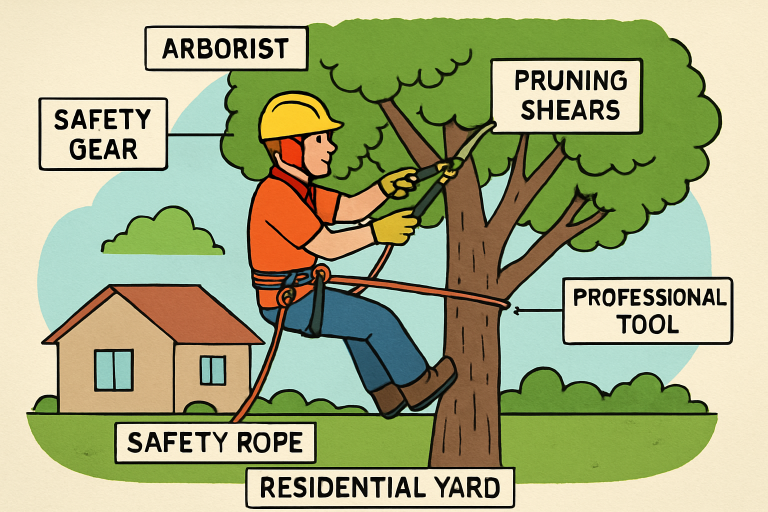
Pruning and trimming are more than aesthetic choices—they are essential for a tree’s structural integrity and growth patterns. Arborists use strategic pruning methods that remove hazardous limbs and enhance the tree’s natural form. By eliminating overcrowded, diseased, or dead branches, arborists reduce the risk of limb drop and tree failure, especially during storms. Proper pruning at the right growth stage improves airflow and sunlight penetration, boosting the tree’s overall health.
Disease and Pest Management
Trees face continuous threats from insects, fungi, bacteria, and viruses. A certified arborist brings valuable diagnostic skills to quickly identify diseases like oak wilt, blight, powdery mildew, and pests like borers or aphids. They employ integrated pest management (IPM) principles, focusing on prevention, monitoring, and targeted interventions to minimize chemical use and foster ecological balance. Effective pest and disease treatments preserve local tree populations and reduce the spread of problems to neighboring properties.
Safe Tree Removal
While preservation is always preferable, some situations require removing a tree for safety or environmental reasons. Dead or dying trees can become hazardous, especially in high-traffic areas. Arborists possess the tools, experience, and techniques to remove trees systematically with minimal impact to surrounding landscapes. Whether a tree is suffering from irrecoverable disease or poses a structural risk after a storm, proper removal protects both people and nearby plants.
Soil and Root Care
Healthy trees rely on robust root systems and nutrient-rich soil. Arborists test and analyze soil conditions to determine deficiencies, compaction, or drainage issues. Remediation may involve aeration for oxygen flow, addition of organic matter, or advanced techniques like vertical mulching. These practices optimize root health, allowing trees to access water and nutrients efficiently. Preventing root rot and encouraging deep root growth are fundamental for long-term stability and drought resilience.
Emergency Response and Storm Preparation
Extreme weather events pose greater risks to trees, especially in regions prone to storms or drought. Arborists assess vulnerability by identifying weak limbs, codominant stems, or overextended branches. Pre-storm pruning, cabling, and bracing help fortify trees against damage. After emergencies, arborists provide rapid response, clearing debris, stabilizing uprooted trees, and applying corrective care to salvage and rehabilitate damaged specimens. Their quick action prevents further harm to people and property.
Long-Term Tree Care Plans
An effective tree care strategy extends over many years. Certified arborists generate custom plans based on tree species, age, site conditions, and owner preferences. These plans typically include schedules for routine inspections, seasonal pruning, fertilization, pest monitoring, and hazard mitigation. A proactive plan keeps trees healthy and helps clients budget for care, preventing costly emergencies down the line. Proper record-keeping supports adaptive management as trees mature and site conditions evolve.