
Please read my disclosure policy to understand how I work with companies and individuals. Linking to a specific site does not imply endorsement of all of their services or content.
Key Takeaways
- Construction accidents can happen even on familiar job sites when conditions change unexpectedly.
- Falls, falling objects, electrical hazards, and heavy equipment are among the most common concerns.
- Philadelphia’s older buildings and busy neighborhoods can create additional challenges.
- Proper training, communication, and safety procedures can help prevent serious injuries.
- Knowing what to do after an accident can help protect your health and preserve important information.
Whether it’s restoring a historic Philadelphia rowhome, repairing a neighborhood business, or building something entirely new, construction workers play an important role in keeping communities growing. But behind every project are hardworking people who face risks that many of us rarely think about.
Construction accidents can change someone’s life in an instant, affecting not only the injured worker but also their family. Understanding common hazards helps create safer workplaces. When an injury occurs, families may also have questions about medical expenses, missed work, and legal options. Consulting an experienced local firm, such as quinnlawyers.com, may help them understand what steps to take.
Why Construction Safety Matters in Philadelphia
Philadelphia presents some unique construction challenges. Older buildings, narrow streets, crowded sidewalks, and ongoing renovations can make already demanding work more complicated.
While every project is different, many construction injuries involve recognizable hazards. Here are ten common causes worth understanding.
1. Falls From Heights
Working on rooftops, ladders, scaffolding, and elevated platforms creates obvious risks. Missing guardrails, unsecured ladders, slippery surfaces, and improperly used safety harnesses can all contribute to dangerous falls. Proper fall protection and regular equipment checks are essential.
2. Falling Tools and Materials
Imagine walking below a construction area when a tool or piece of debris falls from several stories above. Even a relatively small object can cause serious injuries. Securing equipment, installing protective barriers, and restricting access to hazardous areas help protect workers and pedestrians.
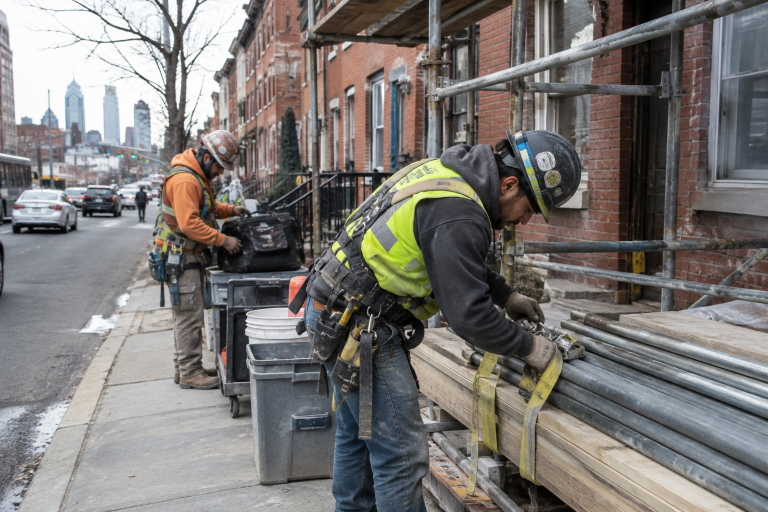
3. Accidents Involving Heavy Equipment
Dump trucks, forklifts, cranes, and excavators are necessary on many job sites, but their size and limited visibility create hazards. Workers can be struck by moving vehicles or get caught in areas where equipment is operating. Clear pathways, trained operators, and effective communication can make a significant difference.
4. Electrical Accidents
Exposed wiring, damaged extension cords, overhead power lines, and temporary electrical systems can lead to shocks, burns, or electrocution. Electrical safety requires proper training, inspections, and careful attention to nearby power sources.
5. Caught-In or Between Accidents
These accidents happen when someone becomes trapped, pinned, or crushed between equipment, materials, or structures. Machinery without proper guards and shifting heavy loads are examples of potential dangers. Safe operating procedures and designated exclusion zones help reduce these risks.
6. Trench and Excavation Collapses
Digging trenches for foundations, utilities, or repairs can be especially dangerous when surrounding soil becomes unstable. Rain, vibrations, and nearby traffic may increase the possibility of collapse. Proper protective systems and inspections are critical before workers enter excavations.
7. Scaffold Failures
Scaffolding lets workers reach hard-to-reach areas during painting, masonry, and building repairs. Unfortunately, improperly assembled platforms, missing guardrails, overloaded structures, or unstable foundations can lead to devastating accidents. Regular inspections and correct installation are vital.
8. Defective Tools and Equipment
Construction workers depend on everything from power saws to safety harnesses. When equipment is damaged, poorly maintained, or defective, the consequences can be serious. Checking tools before use and removing unsafe equipment from service are simple but important precautions.
9. Slips, Trips, and Falls
Not every construction accident involves a rooftop or elevated platform. Loose cables, scattered materials, wet surfaces, and uneven walkways can cause injuries at ground level. Keeping work areas organized and maintaining adequate lighting can prevent many of these incidents.
10. Inadequate Training and Communication
Sometimes the greatest danger isn’t the equipment itself but a lack of preparation. Workers need to understand their responsibilities, recognize hazards, and know how to respond when conditions change. Regular safety meetings, clear instructions, and appropriate supervision help everyone work more confidently.
What Should You Do After a Construction Accident?
Even with precautions in place, accidents can still happen. Knowing how to respond can make an overwhelming situation easier to manage.
Seek Medical Attention
Your health should always come first. Some injuries may not seem serious at first, so get appropriate medical care and follow your healthcare provider’s recommendations.
Report What Happened
Notify a supervisor or site manager as soon as possible. When appropriate, you may also need to report accidents or unsafe construction conditions to local authorities. Philadelphia’s Department of Licenses and Inspections provides information about construction inspections.
Keep Important Records
Photographs, witness information, medical records, and written incident reports may become important later. Document what happened as accurately as possible, without assuming who was responsible.
Final Thoughts
Every construction project represents more than a building or renovation. It represents the people doing the work and the families waiting for them to come home safely.
From better training to properly maintained equipment, everyday safety decisions can make a lasting difference. Understanding these ten common construction hazards is a practical step toward protecting workers and creating safer Philadelphia communities.

